

Edge computing is quietly revolutionizing Swiss web hosting by slashing latency up to 50%, directly enhancing user experience and conversion rates for developers and e-commerce entrepreneurs. As 2026 unfolds, hosting trends around sustainability, AI automation, and multi-region compliance are reshaping how Swiss businesses optimize their online infrastructure. This guide walks you through the key trends impacting performance, cost, and regulatory adherence for websites serving Swiss audiences.
Table of Contents
- Introduction To Web Hosting Trends In 2026
- Edge Computing And Low-Latency Performance
- Green Hosting And Environmental Impact
- AI And Automation In Hosting Management
- Multi-Region Hosting For Compliance And Performance
- Common Hosting Misconceptions In 2026
- Practical Implementation Examples In Switzerland
- Conclusion And Actionable Recommendations
- Optimize Your Swiss Website Hosting With ThunderHosting
Key Takeaways
| Point | Details |
|---|---|
| Edge Computing Performance | Edge computing reduces latency approximately 50%, significantly improving Swiss site speed and user experience. |
| Sustainability Influence | 45% of Swiss companies prioritize hosting providers with sustainability certifications like ISO 14001. |
| AI Automation Benefits | AI-driven automation increases uptime by 15% and reduces downtime by 25%, enhancing reliability. |
| Multi-Region Compliance | Hosting across EU and Swiss data centers meets data sovereignty laws while optimizing latency. |
| Dedicated vs Cloud Cost | Dedicated servers often prove more cost-effective than cloud hosting for mid-sized Swiss e-commerce with steady traffic. |
Introduction to Web Hosting Trends in 2026
The Swiss web hosting landscape in 2026 is shaped by three converging forces: regulatory rigor, performance expectations, and environmental accountability. Swiss companies prioritize hosting solutions balancing local compliance with global connectivity, making infrastructure decisions more complex yet more critical than ever.
Global hosting technologies like edge computing, AI-driven management, and green data centers have matured enough to deliver measurable returns. For Swiss developers and e-commerce entrepreneurs, these trends translate into faster page loads, lower bounce rates, and stronger customer trust. Understanding which innovations align with your business model determines whether you stay competitive or fall behind.
Swiss-specific priorities matter here. Data sovereignty requirements under Swiss and EU law constrain where you can store customer information. Performance demands from Swiss consumers, accustomed to fast broadband, mean milliseconds count. Environmental consciousness affects brand perception, with nearly half of Swiss businesses favoring eco-certified providers.
Key hosting technologies reshaping 2026 include:
- Edge computing nodes positioned closer to Swiss users
- AI tools automating scaling, monitoring, and security responses
- Green data centers with ISO 14001 and similar certifications
- Multi-region architectures balancing compliance and speed
- Hybrid models blending dedicated servers with cloud flexibility
Adaptability separates thriving Swiss online businesses from struggling ones. Your hosting infrastructure must evolve alongside these trends to maintain uptime, meet legal standards, and deliver the experience Swiss customers expect.
Edge Computing and Low-Latency Performance
Edge computing moves data processing from centralized data centers to distributed nodes located geographically closer to end users. For Swiss websites, this means serving content from nodes in Zurich, Geneva, or nearby EU cities instead of distant facilities. The result is dramatic latency reduction, sometimes cutting response times by up to 50% for Swiss users.
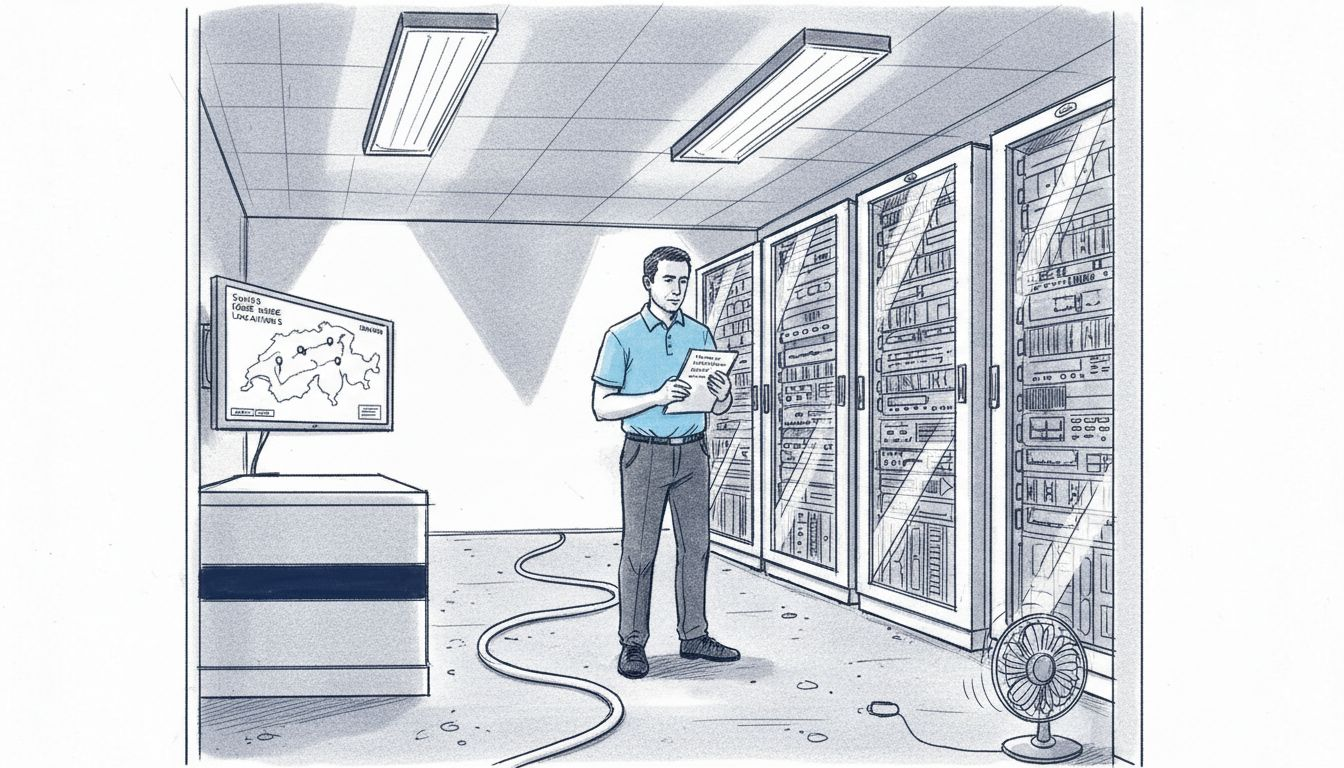
Latency matters because every 100 milliseconds of delay costs conversions. When a Zurich customer clicks your product page, edge nodes deliver cached assets instantly while fetching dynamic content from the nearest server. This architecture works especially well for media-heavy e-commerce sites, SaaS platforms, and content portals.
Swiss businesses implementing edge computing typically pair it with multi-region hosting strategies to maintain compliance. A hybrid approach uses edge nodes for static content delivery while keeping transactional data in Swiss or EU-based core servers. This balances speed with regulatory adherence.
Practical benefits include:
- Faster page loads improving SEO rankings and user satisfaction
- Reduced server load on origin infrastructure
- Better handling of traffic spikes without performance degradation
- Lower bandwidth costs through efficient content caching
Pro Tip: Analyze your traffic patterns using analytics tools to identify geographic concentrations. Deploy edge nodes in regions generating the most traffic to maximize latency improvements without overextending your budget.
Edge computing isn’t just for enterprise giants anymore. Mid-sized Swiss e-commerce sites serving Swiss, German, and French customers see measurable gains. The technology has become accessible through hosting providers offering managed edge services, eliminating the need for in-house expertise.
Green Hosting and Environmental Impact
Sustainability has moved from nice-to-have to deal-breaker for Swiss hosting decisions. 45% of Swiss companies prefer hosting providers with sustainability certifications such as ISO 14001, reflecting both environmental values and brand positioning needs.
Green hosting practices center on renewable energy sourcing, efficient cooling systems, and carbon offset programs. Swiss data centers increasingly run on hydroelectric and solar power, cutting carbon footprints by 60% or more compared to traditional facilities. Advanced cooling techniques using outside air and waste heat recovery further reduce environmental impact.
ISO 14001 certification signals a provider’s commitment to environmental management systems with measurable targets and continuous improvement. Other relevant certifications include EU Energy Label ratings, Carbon Trust Standard, and Green Grid’s data center efficiency metrics. These aren’t just marketing badges; they represent audited practices with real environmental benefits.
Swiss businesses gain multiple advantages from choosing sustainable hosting options:
- Enhanced brand reputation with environmentally conscious customers
- Alignment with corporate sustainability reporting requirements
- Potential cost savings from energy-efficient infrastructure
- Future-proofing against stricter environmental regulations
- Differentiation in competitive Swiss markets
Carbon footprint reductions matter to Swiss consumers who increasingly research companies’ environmental practices before purchasing. B2B clients often require sustainability credentials in vendor assessments. Choosing green hosting becomes a competitive advantage, not just a cost center.
Data centers account for roughly 1% of global electricity consumption, making hosting provider choices environmentally significant. Swiss providers leading in sustainability often offer transparency reports detailing energy sources, PUE (Power Usage Effectiveness) ratios, and carbon offset investments.
AI and Automation in Hosting Management
Artificial intelligence transforms hosting from reactive troubleshooting to proactive optimization. AI-driven automation can increase uptime by 15% and reduce downtime by 25% through predictive analytics and instant response to emerging issues.
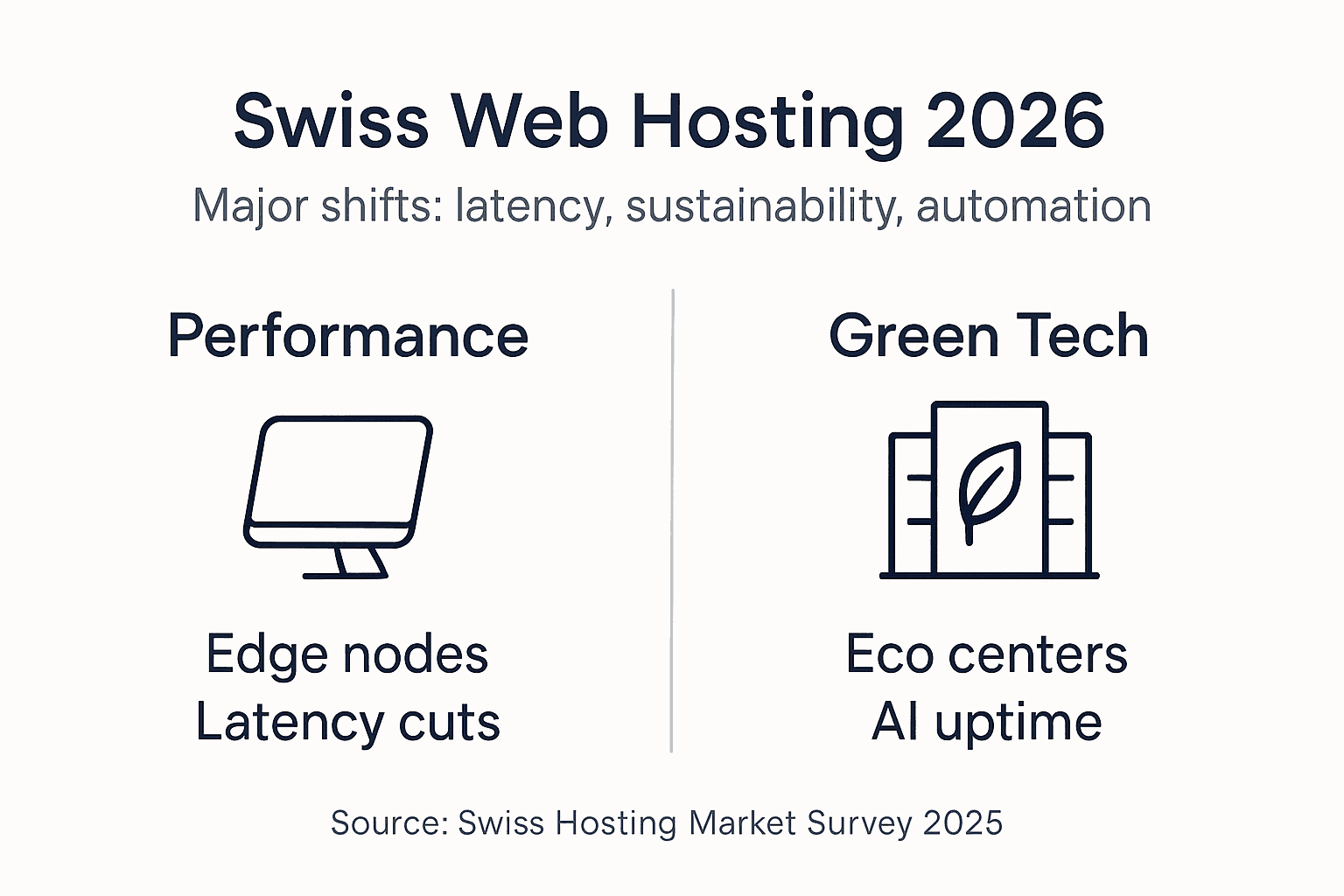
AI hosting tools monitor thousands of performance metrics simultaneously, identifying patterns humans would miss. When traffic begins spiking, AI systems automatically provision additional resources before slowdowns occur. When security threats emerge, machine learning algorithms detect anomalies and trigger defensive measures within milliseconds.
Swiss hosting providers integrate AI across multiple functions:
- Predictive scaling adjusting resources based on traffic forecasts
- Automated security responses blocking threats in real-time
- Performance optimization identifying and resolving bottlenecks
- Intelligent caching deciding what content to preload
- Anomaly detection flagging unusual patterns before failures
For e-commerce sites, AI automation directly impacts revenue. Maintaining 99.9% uptime during peak shopping periods, instantly scaling during flash sales, and preventing DDoS attacks all require speed beyond human response times. AI-powered hosting ecosystems deliver this reliability automatically.
Implementation doesn’t require technical expertise when working with managed hosting providers. AI features often come integrated into control panels, offering one-click activation for common automation scenarios. More advanced users can configure custom rules and thresholds matching specific business needs.
Pro Tip: Start with AI-powered monitoring and alerting even before implementing full automation. Understanding your infrastructure’s patterns through AI analytics helps you make informed decisions about which automation features deliver the most value.
The reliability gains compound over time. AI learns your specific traffic patterns, customer behaviors, and infrastructure quirks, becoming more effective at preventing issues unique to your site. This adaptive capability makes AI automation increasingly valuable as your business grows.
Multi-Region Hosting for Compliance and Performance
Multi-region hosting within EU and Switzerland meets data sovereignty laws and improves latency by distributing content across strategically located data centers. This architecture addresses two critical Swiss business needs: legal compliance and user experience optimization.
Data sovereignty regulations require certain information types to remain within Swiss or EU borders. Customer personal data, financial transactions, and health information often fall under these restrictions. Multi-region hosting lets you segment data geographically, keeping sensitive information compliant while delivering other content from optimal locations.
Geographic distribution also creates redundancy. If one data center experiences issues, traffic automatically routes to healthy facilities without service interruption. This disaster recovery capability proves essential for e-commerce during critical sales periods.
| Region | Typical Latency to Zurich | Compliance Status | Best Use Case |
|---|---|---|---|
| Switzerland (Zurich) | <5ms | Full Swiss compliance | Sensitive customer data, financial transactions |
| Germany (Frankfurt) | 15-20ms | EU GDPR compliant | Primary content delivery for DACH region |
| France (Paris) | 25-30ms | EU GDPR compliant | French-speaking market optimization |
| Finland (Helsinki) | 40-45ms | EU GDPR compliant | Northern European reach, cost-effective |
| Singapore | 160-180ms | Non-EU | Asian market expansion |
Swiss e-commerce sites serving domestic and neighboring markets benefit most from Swiss-German-French data center combinations. This setup keeps core operations compliant while minimizing latency across your primary customer base.
Implementing multi-region hosting strategies requires planning around data classification. Identify which information must stay in Switzerland, which can reside anywhere in the EU, and which has no geographic restrictions. This classification drives your architecture decisions and hosting provider selection.
Performance improvements from multi-region hosting compound with edge computing. Edge nodes cache and serve static content globally while multi-region core servers handle dynamic requests from compliant locations. This layered approach maximizes both speed and regulatory adherence.
Common Hosting Misconceptions in 2026
Several persistent myths confuse Swiss businesses evaluating hosting options. Understanding reality versus perception helps you make cost-effective, performance-optimized decisions.
Cloud hosting always costs less than dedicated servers. This assumption fails for businesses with predictable, steady traffic. Dedicated servers can be more cost-effective than cloud hosting for mid-sized Swiss e-commerce with steady traffic because you avoid per-resource pricing premiums and egress fees.
Cloud shines for highly variable workloads where you need to scale up and down rapidly. Dedicated servers excel when you can accurately forecast resource needs and run consistent workloads. Many Swiss e-commerce sites fall into the latter category, making dedicated infrastructure more economical.
Edge computing requires complex technical management. Modern managed edge services have eliminated this barrier. Providers handle node deployment, configuration, and maintenance while you control edge behavior through simple dashboards. The technical complexity lives with the hosting provider, not your team.
Multi-region hosting creates compliance nightmares. Proper implementation actually simplifies compliance by clearly segmenting data geographically. Working with providers experienced in Swiss and EU regulations ensures your architecture meets legal requirements from day one.
Key misconceptions to avoid:
- Assuming cloud automatically provides better uptime than dedicated servers
- Believing sustainability certifications are purely marketing without measurable impact
- Thinking AI automation requires data science expertise to implement
- Expecting edge computing to solve all performance issues regardless of backend optimization
- Assuming the cheapest hosting option delivers adequate performance for e-commerce
The dedicated versus cloud decision depends on your specific traffic patterns, technical capabilities, and growth trajectory. Neither option universally beats the other; context determines the right choice.
Sustainability influence is real and growing. Swiss consumers increasingly factor environmental practices into purchasing decisions, making green hosting credentials a revenue driver, not just a cost.
Practical Implementation Examples in Switzerland
Swiss businesses successfully adopting 2026 hosting trends provide roadmaps for your own infrastructure optimization. These real-world examples demonstrate tangible results from embracing edge computing, AI automation, and multi-region architectures.
Swiss mid-size e-commerce businesses saw 30% faster site speeds and 20% higher conversions using hybrid edge-cloud hosting. These companies typically started with dedicated servers for core operations, then added edge nodes for content delivery to Swiss, German, and French customers.
Implementation followed a structured approach:
- Audit existing infrastructure identifying performance bottlenecks and compliance gaps
- Classify data by regulatory requirements and access patterns
- Select hosting providers offering Swiss data centers plus edge capabilities
- Migrate static assets and cacheable content to edge nodes first
- Implement AI-powered monitoring to establish performance baselines
- Gradually shift dynamic content to multi-region architecture
- Enable AI automation for scaling and security responses
- Continuously optimize based on analytics and user behavior data
Lessons learned emphasize starting small and scaling methodically. Companies rushing full infrastructure overhauls often encountered unexpected compatibility issues or cost overruns. Those taking incremental approaches validated improvements at each stage before proceeding.
Common pitfalls include underestimating bandwidth requirements for multi-region synchronization, overlooking edge cache invalidation strategies, and failing to test failover scenarios thoroughly. Planning for these challenges upfront prevents costly surprises during peak traffic periods.
Custom hosting configurations prove most successful when aligned with specific business models. B2B SaaS platforms prioritize uptime and data sovereignty. Consumer e-commerce focuses on speed and scalability. Content publishers emphasize edge delivery and bandwidth efficiency.
Swiss companies benefit from working with hosting providers understanding local regulatory requirements and Swiss-German-French market dynamics. Generic global providers often lack nuanced knowledge of Swiss compliance needs or optimal DACH region data center placement.
Conclusion and Actionable Recommendations
Web hosting in 2026 demands strategic thinking around performance, compliance, and sustainability. Swiss developers and e-commerce entrepreneurs face unique challenges balancing fast user experiences with strict data sovereignty rules and environmental expectations.
Edge computing delivers the most immediate performance gains, cutting latency up to 50% for Swiss users. Multi-region hosting ensures legal compliance while maintaining speed. AI automation reduces operational burden and improves reliability. Green hosting credentials strengthen brand positioning with environmentally conscious Swiss consumers.
Actionable steps to optimize your Swiss hosting infrastructure:
- Assess current performance using tools measuring latency, uptime, and page load speeds
- Classify your data by compliance requirements to guide architecture decisions
- Evaluate tailored hosting solutions matching your traffic patterns and growth plans
- Compare dedicated server costs against cloud pricing for your specific workload
- Verify provider sustainability certifications and environmental practices
- Implement AI-powered monitoring before full automation to understand your patterns
- Test edge computing with high-traffic pages before full site migration
- Document your compliance architecture for regulatory audits
Cost analysis should consider total ownership including management time, not just monthly fees. Dedicated servers often require less ongoing optimization than complex cloud architectures. Green hosting may carry slight premiums offset by brand value and customer preference.
Provider selection criteria must weight Swiss and EU data center availability, sustainability certifications, AI automation capabilities, and experience serving Swiss businesses. Generic global providers rarely understand nuances of Swiss compliance or DACH market dynamics.
The competitive advantage goes to Swiss businesses implementing these trends thoughtfully rather than chasing every new technology. Focus on trends directly addressing your performance bottlenecks, compliance gaps, or customer expectations. Incremental improvements compound into significant advantages over competitors running outdated infrastructure.
Optimize Your Swiss Website Hosting with ThunderHosting
Navigating 2026 hosting trends becomes straightforward with the right infrastructure partner. ThunderHosting delivers high performance affordable web hosting designed for Swiss developers and e-commerce entrepreneurs demanding reliability, compliance, and speed.
Our bare metal dedicated servers provide the predictable performance and cost structure mid-sized Swiss businesses need. Combined with strategic data center placement in Switzerland and across the EU, you get both compliance and optimal latency for your DACH region customers.
We understand Swiss hosting requirements because we’re based in Ticino, serving Swiss businesses daily. Our custom hosting solutions adapt to your specific needs whether you run e-commerce, SaaS, or content platforms. Sustainability credentials, AI-powered management tools, and multi-region capabilities come standard, not as expensive add-ons.
Explore how ThunderHosting can optimize your infrastructure for the trends reshaping Swiss web hosting in 2026.
FAQ
What is edge computing and how does it improve website speed in Switzerland?
Edge computing places processing nodes geographically closer to Swiss users, reducing the physical distance data travels. This architectural approach cuts latency by up to 50%, directly improving page load times and user experience for visitors accessing your site from Switzerland.
How does sustainable hosting benefit Swiss e-commerce businesses?
Sustainable hosting reduces your environmental footprint while enhancing brand reputation with eco-conscious Swiss consumers. With 45% of Swiss companies preferring providers holding certifications like ISO 14001, green hosting credentials become competitive differentiators that influence purchasing decisions and strengthen customer loyalty.
Why might dedicated hosting be better than cloud for some Swiss businesses?
Dedicated servers offer predictable monthly costs and consistent performance ideal for steady traffic patterns common in established e-commerce. Cloud hosting’s variable pricing and potential latency without local edge nodes make dedicated infrastructure more cost-effective and reliable for mid-sized Swiss businesses with forecastable resource needs.
What does multi-region hosting mean for Swiss data compliance?
Multi-region hosting stores data across Swiss and EU data centers meeting strict sovereignty requirements under Swiss and European law. This geographic distribution keeps sensitive customer information compliant while serving content from locations nearest to users, simultaneously addressing legal obligations and performance optimization.
How does AI automation increase hosting reliability?
AI continuously monitors infrastructure metrics, predicting and preventing issues before they impact users. Automated scaling responds to traffic spikes instantly while security systems block threats in real-time, increasing uptime by 15% and reducing downtime by 25% compared to manual management approaches.
Recommended
- Swiss E-Commerce Hosting: 99.9% Uptime Reduces Bounce 40% – ThunderHosting
- WordPress Hosting: Unlocking Swiss Performance – ThunderHosting
- Multi-Region Hosting: Boosting Swiss E-Commerce Reach – ThunderHosting
- Virtual Hosting Explained: Boosting Swiss Businesses – ThunderHosting
- Our Blog – Amz-Scalable