

Choosing the right hosting solution often feels overwhelming for Swiss business owners managing busy online shops or growing service companies. Reliable virtual hosting means more than just storing files online—it unlocks flexible resource management while keeping your website secure and accessible any time. This introduction clears up common misconceptions, highlights key benefits of virtual hosting, and helps you identify the best-fit solution to keep your digital presence running smoothly with minimal hassle.
Table of Contents
- Virtual Hosting Basics And Misconceptions
- Common Types Of Virtual Hosting Solutions
- Key Features And How Virtual Hosting Works
- Legal And Security Requirements In Switzerland
- Comparing Costs, Scalability, And Alternatives
- Common Mistakes And Pitfalls To Avoid
Key Takeaways
| Point | Details |
|---|---|
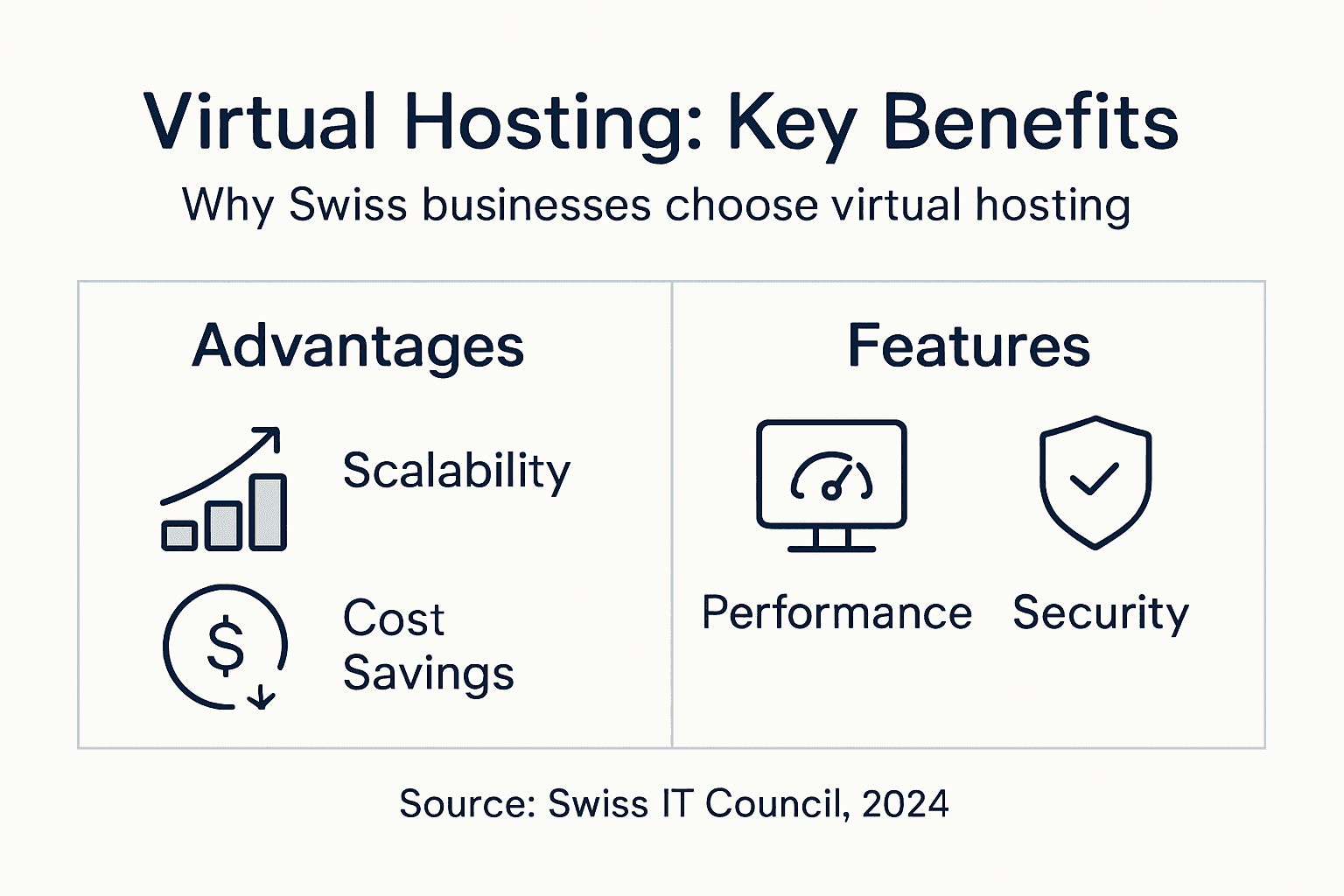
| Cost Efficiency | Virtual hosting reduces the need for physical servers, leading to significant cost savings for businesses. |
| Scalability | Businesses benefit from the ability to quickly adjust resources based on demand, accommodating growth without significant investments. |
| Security Compliance | Swiss legal requirements enforce strict data protection measures, ensuring businesses maintain high security standards for online operations. |
| Active Management | Regular audits and updates of virtual hosting configurations are essential to optimize performance and prevent vulnerabilities. |
Virtual hosting basics and misconceptions
Virtual hosting represents a revolutionary approach for Swiss businesses seeking flexible and efficient online infrastructure. At its core, virtual machine technology enables organizations to run multiple operating systems and applications on shared hardware, dramatically improving computational efficiency and resource management.
The fundamental concept of virtual hosting involves creating digital environments that mimic physical server configurations. These virtualized platforms offer numerous advantages over traditional dedicated hardware:
- Significant cost reduction by eliminating physical server investments
- Enhanced scalability to quickly adjust computing resources
- Improved security through isolated digital environments
- Faster deployment of new server configurations
- Reduced energy consumption and carbon footprint
Many Swiss small and medium enterprises mistakenly believe virtual hosting is complex or unreliable. However, modern virtualization technologies have transformed these platforms into robust, secure solutions. Web hosting fundamentals demonstrate that virtual hosting provides 24/7 online accessibility, supporting critical business communication and commerce needs.
Performance optimization becomes significantly easier with virtual hosting. Businesses can dynamically allocate computational resources, ensuring websites and applications maintain peak efficiency during varying traffic conditions. This flexibility allows Swiss companies to adapt quickly to changing digital demands without massive infrastructure investments.
Pro tip: When selecting a virtual hosting provider, prioritize platforms offering seamless scalability, robust security protocols, and responsive technical support.
Common types of virtual hosting solutions
Virtual hosting solutions have evolved significantly, offering Swiss businesses diverse options to manage their digital infrastructure. Virtual machine architectures provide multiple approaches for deploying online services, each with unique characteristics tailored to different organizational needs.
The primary types of virtual hosting solutions include:
- Shared Hosting: Most economical option where multiple websites share a single server’s resources
- Virtual Private Server (VPS): Provides dedicated resources within a shared physical environment
- Dedicated Hosting: Entire physical server allocated to a single organization
- Cloud Hosting: Distributed infrastructure spanning multiple interconnected servers
- Managed Hosting: Professional service where provider handles technical management
Each hosting type offers distinct advantages for businesses. Web hosting services demonstrate that selecting the right solution depends on factors like budget, performance requirements, technical expertise, and scalability needs. Small Swiss enterprises might prefer shared hosting for cost-effectiveness, while growing companies often transition to VPS or cloud solutions.
Performance considerations play a crucial role in virtual hosting selection. Businesses must evaluate computational requirements, expected website traffic, security protocols, and potential future growth when choosing their hosting infrastructure. Understanding these nuanced differences allows organizations to make informed decisions that align with their digital strategy and operational objectives.
Pro tip: Conduct a comprehensive assessment of your current and projected computational needs before selecting a virtual hosting solution to ensure optimal performance and cost-effectiveness.
To better understand the options available, here’s a concise comparison of common virtual hosting types and key business considerations:
| Hosting Type | Resource Allocation | Scalability | Typical Use Case |
|---|---|---|---|
| Shared Hosting | Minimal per site | Limited | Low-traffic websites |
| VPS | Moderate, isolated | Flexible | Growing businesses |
| Dedicated Hosting | Full server control | Very limited | High-performance needs |
| Cloud Hosting | Dynamic, distributed | Highly scalable | Handling variable traffic |
| Managed Hosting | Provider-managed | Scalable | Non-technical teams |
Key features and how virtual hosting works
Virtual hosting represents a sophisticated technological framework that enables businesses to maximize computational resources efficiently. Virtual environments optimize software management by creating isolated digital infrastructures that allow precise control and customization of online services.
The core features of virtual hosting include:
- Resource Allocation: Dynamic distribution of computational power
- Scalability: Easy expansion or reduction of hosting resources
- Isolation: Secure separation between different digital environments
- Cost Efficiency: Reduced hardware and maintenance expenses
- Flexibility: Quick adaptation to changing technological requirements
Web hosting fundamentals reveal that virtual hosting operates through sophisticated server technologies that store website files and deliver them instantly across global networks. This process involves complex interactions between hardware, software, and network infrastructure, allowing businesses to maintain continuous online presence with minimal technical overhead.

Performance optimization remains a critical aspect of virtual hosting. Swiss businesses can leverage these technologies to create robust, scalable digital platforms that adapt seamlessly to fluctuating traffic demands. The ability to quickly provision resources, implement security protocols, and manage computational load makes virtual hosting an essential strategy for modern digital enterprises.
Pro tip: Regularly audit your virtual hosting configuration to ensure optimal resource allocation and identify potential performance bottlenecks before they impact your online operations.
Legal and security requirements in Switzerland
Swiss data protection laws create a robust legal framework that ensures exceptional digital security and privacy for businesses operating online. These comprehensive regulations provide stringent protection mechanisms that distinguish Switzerland’s hosting environment from less rigorous international standards.
Key legal and security requirements for virtual hosting in Switzerland include:
- Data Sovereignty: Complete control over digital assets stored within national borders
- Privacy Protection: Strict limitations on unauthorized data access
- Encryption Standards: Mandatory advanced security protocols
- Incident Reporting: Legally required cybersecurity breach notifications
- International Compliance: Alignment with global data protection frameworks
Cybersecurity regulations mandate comprehensive protection strategies for digital infrastructures. Swiss law imposes significant penalties for unauthorized system access, with potential criminal charges including imprisonment. Financial institutions face particularly stringent requirements, with the Swiss Financial Market Supervisory Authority (FINMA) enforcing detailed compliance standards.
Regulatory compliance represents a critical consideration for Swiss businesses implementing virtual hosting solutions. Organizations must develop sophisticated security protocols that not only meet legal requirements but also protect sensitive digital assets from potential cyber threats. This involves implementing multi-layered security approaches, conducting regular risk assessments, and maintaining comprehensive incident response strategies.
Pro tip: Consult with a Swiss cybersecurity legal expert to ensure your virtual hosting configuration fully complies with current national data protection regulations.
Here is a summary of Swiss legal and security requirements for virtual hosting, along with practical business impacts:
| Requirement | What It Means | Business Impact |
|---|---|---|
| Data Sovereignty | Data stays within Switzerland | Greater control and compliance |
| Privacy Protection | Strict access limitations | Enhanced customer trust |
| Encryption Standards | Mandatory high-level security | Lower risk of breaches |
| Incident Reporting | Required breach notification | Improved transparency |
| International Compliance | Aligns with global standards | Easier cross-border operations |
Comparing costs, scalability, and alternatives
Hosting capacity analysis reveals critical insights into evaluating virtual hosting solutions for Swiss businesses. Understanding the nuanced trade-offs between cost, performance, and scalability becomes essential for making informed technological investments.
Key comparative factors for virtual hosting solutions include:
- Initial Setup Costs: Upfront investment requirements
- Monthly Operational Expenses: Ongoing financial commitments
- Scalability Potential: Ability to expand or contract resources
- Performance Metrics: Processing speed and reliability
- Upgrade Flexibility: Ease of transitioning between hosting tiers
Capacity expansion strategies demonstrate that businesses should conduct comprehensive assessments before selecting a hosting solution. This involves analyzing current computational needs, projected growth trajectories, and potential future technological requirements to ensure selected infrastructure provides long-term value.
Cost-effectiveness extends beyond simple price comparisons. Swiss businesses must evaluate total ownership costs, including potential downtime, maintenance expenses, security investments, and potential productivity impacts. Sophisticated decision-making involves understanding the intricate balance between immediate financial considerations and strategic technological capabilities.
Pro tip: Create a detailed computational requirements spreadsheet comparing multiple hosting solutions to objectively evaluate total cost of ownership and performance potential.
Common mistakes and pitfalls to avoid
Cybersecurity user pitfalls represent critical challenges that Swiss businesses must proactively address when implementing virtual hosting solutions. Understanding these potential vulnerabilities can help organizations develop more robust and resilient digital infrastructures.
Common virtual hosting mistakes include:
- Inadequate Security Configuration: Leaving default settings unchanged
- Overlooking Regular Updates: Neglecting critical system patches
- Poor Resource Allocation: Incorrectly estimating computational needs
- Insufficient Backup Strategies: Failing to implement comprehensive data protection
- Ignoring Scalability Requirements: Selecting inflexible hosting solutions
Technical oversights can lead to significant operational risks. Many Swiss businesses underestimate the complexity of managing virtual hosting environments, assuming that technological solutions will automatically resolve potential vulnerabilities. This approach often results in critical security gaps and performance limitations that can compromise entire digital infrastructures.
Performance monitoring demands continuous attention and strategic planning. Organizations must develop proactive approaches that anticipate potential challenges, regularly assess system capabilities, and implement adaptive strategies to mitigate risks. This involves creating comprehensive protocols for system maintenance, security audits, and ongoing performance optimization.
Pro tip: Develop a quarterly digital infrastructure audit checklist to systematically identify and address potential vulnerabilities in your virtual hosting configuration.
Elevate Your Swiss Business with Trusted Virtual Hosting Solutions
Navigating the complexities of virtual hosting can feel overwhelming. You want an online infrastructure that offers scalability, security, and cost efficiency while fully complying with Swiss data protection laws. ThunderHosting understands these challenges and provides tailored hosting options, including VPS, dedicated servers, and shared hosting, to fit your current needs and future growth. Unlock the benefits of reliable resource allocation and seamless performance optimization without compromising privacy or control.
Experience how ThunderHosting simplifies virtual hosting with expert support, flexible plans, and global data centers designed for Swiss businesses seeking robust digital platforms. Don’t wait until technical pitfalls or scalability limits hold you back. Visit ThunderHosting today and start building a secure and scalable online presence that grows with your business. Explore our services now at ThunderHosting and discover how advanced hosting becomes accessible and manageable for you.
Frequently Asked Questions
What is virtual hosting and how does it work?
Virtual hosting involves creating digital environments that mimic physical server configurations, allowing multiple operating systems and applications to run on shared hardware. This process optimizes resource management and computational efficiency, enabling businesses to deliver online services effectively.
What are the advantages of using virtual hosting for my business?
Virtual hosting offers several benefits, including significant cost reductions by eliminating the need for physical servers, enhanced scalability to adjust resources quickly, improved security through isolated environments, faster deployment of server configurations, and reduced energy consumption.
How do I choose the right type of virtual hosting for my needs?
Selecting the appropriate virtual hosting type depends on factors such as your budget, performance requirements, technical expertise, and scalability needs. Options include shared hosting for cost-effective solutions, VPS for dedicated resources, dedicated hosting for high-performance needs, cloud hosting for scalability, and managed hosting for non-technical teams.
What legal and security requirements should I consider for virtual hosting?
Legal and security considerations for virtual hosting include data sovereignty, stringent privacy protections, mandatory encryption standards, incident reporting for cybersecurity breaches, and compliance with international data protection frameworks. Ensuring your virtual hosting solution adheres to these requirements is critical for protecting sensitive digital assets.