

Finding a truly secure website hosting solution can feel daunting for Swiss e-commerce entrepreneurs who depend on strong data protection and regulatory compliance. With Switzerland’s Federal Act on Data Protection and strict privacy laws, choosing a provider that offers exceptional legal protections and advanced technical controls makes a real difference for your online business. This guide outlines practical steps to help you confidently assess, select, and configure hosting solutions that support reliable performance and safeguard sensitive information.
Table of Contents
- Step 1: Assess Specific Hosting And Security Requirements
- Step 2: Select A Reliable, Compliant Hosting Provider
- Step 3: Configure Secure Server Settings And Firewalls
- Step 4: Install Ssl Certificates And Enable Https
- Step 5: Verify And Test Hosting Security Measures
Quick Summary
| Key Point | Explanation |
|---|---|
| 1. Assess hosting and security needs | Conduct a thorough evaluation of your digital infrastructure and legal compliance within Switzerland to protect your business effectively. |
| 2. Choose a compliant hosting provider | Select a reputable hosting provider that adheres to Swiss data protection laws and offers robust security features for your digital assets. |
| 3. Configure server security settings | Implement strict access controls, firewalls, and network segmentation to defend against cyber threats and ensure regulatory compliance. |
| 4. Install SSL certificates and HTTPS | Secure communication channels by installing SSL certificates and activating HTTPS to protect sensitive data and build user trust. |
| 5. Validate security measures regularly | Conduct frequent security assessments and penetration tests to ensure your hosting environment remains resilient against potential vulnerabilities. |
Step 1: Assess specific hosting and security requirements
Assessing your hosting and security requirements is a critical first step for Swiss businesses looking to establish a robust online infrastructure. Your goal is to create a comprehensive evaluation of your digital needs, ensuring that your website remains protected, compliant, and performant.
Begin by analyzing your specific business context through a systematic approach. Data protection considerations are paramount, especially in a country with stringent legal frameworks like Switzerland. Consider these key assessment criteria:
- Legal Compliance: Verify alignment with the Federal Act on Data Protection (FADP)
- Data Sovereignty: Confirm local hosting within Swiss borders
- Security Protocols: Evaluate encryption and network protection standards
- Performance Requirements: Determine expected traffic and computational needs
The evaluation process involves examining multiple dimensions of your hosting environment. Technical considerations should include network availability, which in Swiss hosting typically exceeds 99.99%, and advanced security technologies like end-to-end encryption. Your assessment must also factor in specific regulatory requirements for your industry sector.
Swiss hosting solutions provide exceptional legal protections and technical controls that directly support business security objectives.
Prioritize understanding service level agreements (SLAs) that define operational resilience and technical support parameters. Different hosting models – such as cloud, VPS, and dedicated servers – offer varying levels of control and scalability. Match your technical requirements with the most appropriate hosting architecture.
Here is a comparison of common Swiss hosting models and their impact on key business priorities:
| Hosting Model | Control Level | Scalability | Compliance Suitability |
|---|---|---|---|
| Cloud | Moderate | Highly scalable | Strong, if Swiss provider |
| VPS | High | Moderate | Good with proper setup |
| Dedicated Server | Full | Limited | Excellent for strict needs |
Pro tip: Conduct a comprehensive security audit before finalizing your hosting selection to identify potential vulnerabilities and ensure complete alignment with your business’s digital strategy.
Step 2: Select a reliable, compliant hosting provider
Choosing a hosting provider that meets Swiss business standards requires careful evaluation of multiple critical factors. Your selection will directly impact your website’s performance, security, and legal compliance.
Begin by thoroughly investigating providers that demonstrate robust digital business law compliance. Key considerations for your selection process include:
- Legal Framework: Verify adherence to the Federal Act on Data Protection
- Data Security: Assess encryption protocols and incident management capabilities
- Infrastructure: Evaluate network reliability and server performance
- Support Services: Examine technical support responsiveness and expertise
- Geographical Location: Confirm data centers are located within Swiss borders
Careful provider selection goes beyond technical specifications. Look for hosting partners who understand the nuanced regulatory environment of Swiss digital businesses. This means providers should offer transparent data handling policies, demonstrate proactive cybersecurity measures, and provide clear documentation about their compliance strategies.
A truly reliable Swiss hosting provider acts as a strategic partner in protecting your digital infrastructure.
Consider requesting detailed documentation about their security certifications, data protection protocols, and specific measures for maintaining regulatory compliance. Request comprehensive service level agreements that explicitly outline their commitment to protecting your business’s digital assets.
Pro tip: Request comprehensive security audits and compliance documentation from potential hosting providers before making your final selection to ensure complete alignment with Swiss regulatory requirements.
Step 3: Configure secure server settings and firewalls
Configuring your server settings and firewalls is a critical defense mechanism that protects your digital infrastructure from potential cyber threats. This step involves implementing strategic technical controls that safeguard your online assets and ensure regulatory compliance.
Begin by conducting a comprehensive security vulnerability assessment that identifies potential network weaknesses. Key configuration priorities include:
- Access Control: Implement strict user authentication protocols
- Network Segmentation: Divide server environments to limit potential breach impacts
- Firewall Configuration: Set up multiple layers of network protection
- Intrusion Detection: Enable advanced monitoring systems
- Regular Security Updates: Maintain current patch levels for all systems
Careful configuration requires understanding the nuanced technical requirements of Swiss digital security standards. This means going beyond basic firewall settings and creating a comprehensive security ecosystem that adapts to evolving cyber threats.
Effective server security is not a one-time task but an ongoing commitment to protecting your digital infrastructure.
Prioritize implementing privacy by design principles, which means configuring systems with security as a foundational element rather than an afterthought. This approach involves continuous monitoring, regular vulnerability scans, and proactive threat management strategies.

Pro tip: Conduct quarterly comprehensive security audits and penetration testing to identify and address potential vulnerabilities before they can be exploited by malicious actors.
Step 4: Install SSL certificates and enable HTTPS
Securing your website’s communication channels is a critical step in protecting your digital assets and building user trust. Installing SSL certificates and enabling HTTPS transforms your website from a potentially vulnerable platform to a secure communication environment.
Begin by obtaining a robust SSL certificate through modern certificate authorities that align with Swiss hosting standards. Key implementation steps include:
- Certificate Selection: Choose a certificate matching your security requirements
- Validation Process: Complete domain and organization verification
- Installation Configuration: Upload certificate to your hosting platform
- Protocol Activation: Enable HTTPS across all website pages
- Redirect Setup: Implement automatic HTTP to HTTPS redirection
Effective SSL implementation goes beyond simple certificate installation. You must ensure comprehensive encryption that covers all website interactions, protecting sensitive data transmission between your server and users’ browsers.
HTTPS is not just a technical requirement but a fundamental trust signal for your online business.
Consider the broader implications of SSL deployment, which extends beyond encryption to directly impact user perception, search engine rankings, and regulatory compliance. Modern browsers increasingly highlight secure connections, making HTTPS a critical component of your digital strategy.
Pro tip: Automate certificate renewals and configure periodic security scans to maintain continuous HTTPS protection and quickly address any potential vulnerabilities.
Step 5: Verify and test hosting security measures
Validating your hosting security infrastructure is a critical final step that ensures all previous configurations effectively protect your digital assets. This comprehensive verification process transforms theoretical security settings into proven, reliable defense mechanisms.
Begin by conducting comprehensive security assessments that systematically evaluate your entire hosting environment. Key verification activities include:
- Vulnerability Scanning: Identify potential network and system weaknesses
- Penetration Testing: Simulate real-world cyber attack scenarios
- Configuration Auditing: Review firewall and server security settings
- Incident Response Verification: Test emergency protocol effectiveness
- Compliance Validation: Confirm alignment with Swiss cybersecurity regulations
Thorough testing requires more than automated tools. You must critically analyze results, understanding the nuanced implications of each discovered vulnerability and developing strategic remediation plans.
Security verification is not a one-time event but an ongoing commitment to protecting your digital ecosystem.
Prioritize creating a structured testing methodology that provides comprehensive insights into your hosting environment’s resilience. This means developing repeatable processes for continuous monitoring and rapid response to emerging security challenges.
This table summarizes critical security testing types and what business risk they address:
| Test Type | Purpose | Business Risk Addressed |
|---|---|---|
| Vulnerability Scan | Detects known weaknesses | Data leaks, malware exposure |
| Penetration Test | Simulates real attacks | Unauthorized system access |
| Configuration Audit | Reviews system settings | Misconfigurations, compliance gap |
| Incident Response | Tests emergency protocols | Downtime, breach management delay |
Pro tip: Schedule quarterly comprehensive security tests and maintain detailed documentation of findings to create a proactive, adaptive security strategy.
Secure Your Swiss Business Website with Trusted Hosting Solutions
Swiss businesses face unique challenges in securing their online presence while maintaining compliance with strict data protection laws and performance demands. From assessing your hosting needs to configuring firewalls and SSL certificates, it is critical to choose a provider that understands these requirements and provides reliable, scalable infrastructure tailored to your goals. ThunderHosting specializes in offering professional web hosting options including shared hosting, VPS, and dedicated servers designed to meet Swiss data sovereignty and security standards.
Key benefits you gain with ThunderHosting:
- Hosting located in strategic global data centers including Switzerland for low latency and enhanced privacy
- Expert support with comprehensive security configurations and easy setup for businesses at any technical level
- Flexible plans that scale alongside your digital growth without compromising compliance or performance
Get started with ThunderHosting today to experience secure, compliant, and performant hosting designed specifically for Swiss businesses.

Don’t leave your website’s security and compliance to chance. Visit ThunderHosting now and take the first step toward a stronger, more secure online presence.
Frequently Asked Questions
What are the key steps in the secure website hosting process for Swiss businesses?
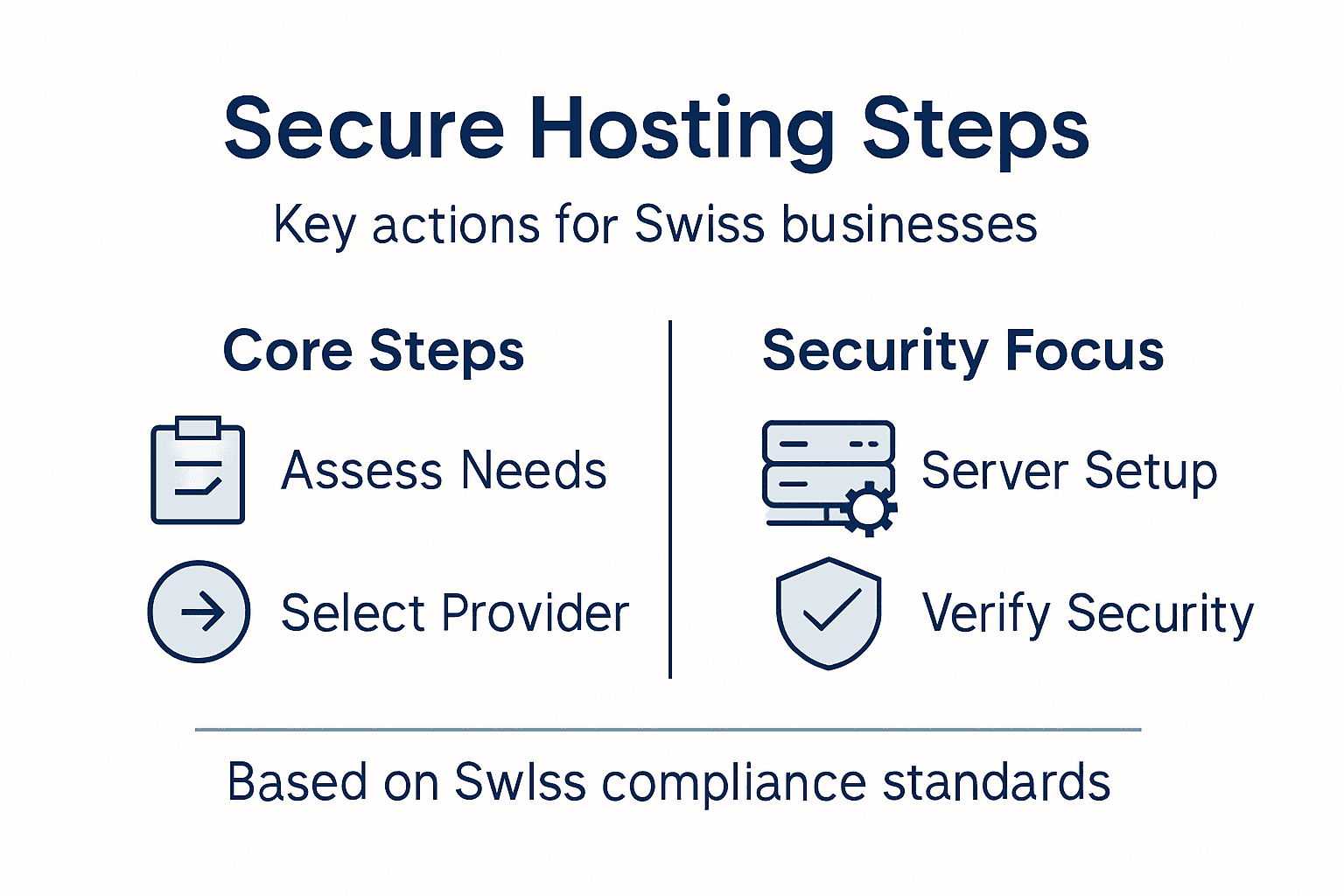
To ensure a secure website hosting process, Swiss businesses should assess hosting and security requirements, select a reliable hosting provider, configure server settings and firewalls, install SSL certificates, and verify security measures. Start by conducting a thorough evaluation of your digital needs to align your hosting choices with legal and security standards.
How can I ensure my hosting provider complies with Swiss regulations?
Verify that your hosting provider adheres to the Federal Act on Data Protection by requesting documentation of their compliance strategies and security certifications. Choose providers who openly outline their data handling policies and demonstrate a clear understanding of Swiss regulatory requirements.
What types of hosting models are available for Swiss businesses?
Common hosting models for Swiss businesses include cloud hosting, Virtual Private Servers (VPS), and dedicated servers. Each model offers different levels of control and scalability; for example, cloud hosting is highly scalable, while dedicated servers provide complete control, suited for strict compliance needs.
How often should I conduct security audits on my hosting setup?
It is recommended to conduct comprehensive security audits at least quarterly. Schedule these audits to identify potential vulnerabilities and ensure that your hosting environment remains compliant with evolving security standards.
What are the benefits of installing SSL certificates on my website?
Installing SSL certificates secures communications between your website and its users, protecting sensitive data. Enabling HTTPS not only enhances security but also builds trust with your visitors and can positively impact your search engine rankings, making it an essential step in your hosting process.
What should I include in my server configuration for optimal security?
Your server configuration should include access controls, network segmentation, firewall layers, and intrusion detection systems. Implementing these controls creates a robust security environment that helps defend against cyber threats and complies with best practices for secure online operations.