

Finding a web hosting provider can feel much like searching for the perfect business location in Switzerland. The wrong choice leads to headaches like unreliable uptime, frustrating setup, and security worries. Swiss small and medium business owners need more than just rented server space—they rely on complete infrastructure management that keeps stores open and customers confident. This guide clears up the most common web hosting myths, outlines what hosting actually delivers, and explains what sets reliable Swiss-focused solutions apart.
Table of Contents
- Defining Web Hosting And Common Misconceptions
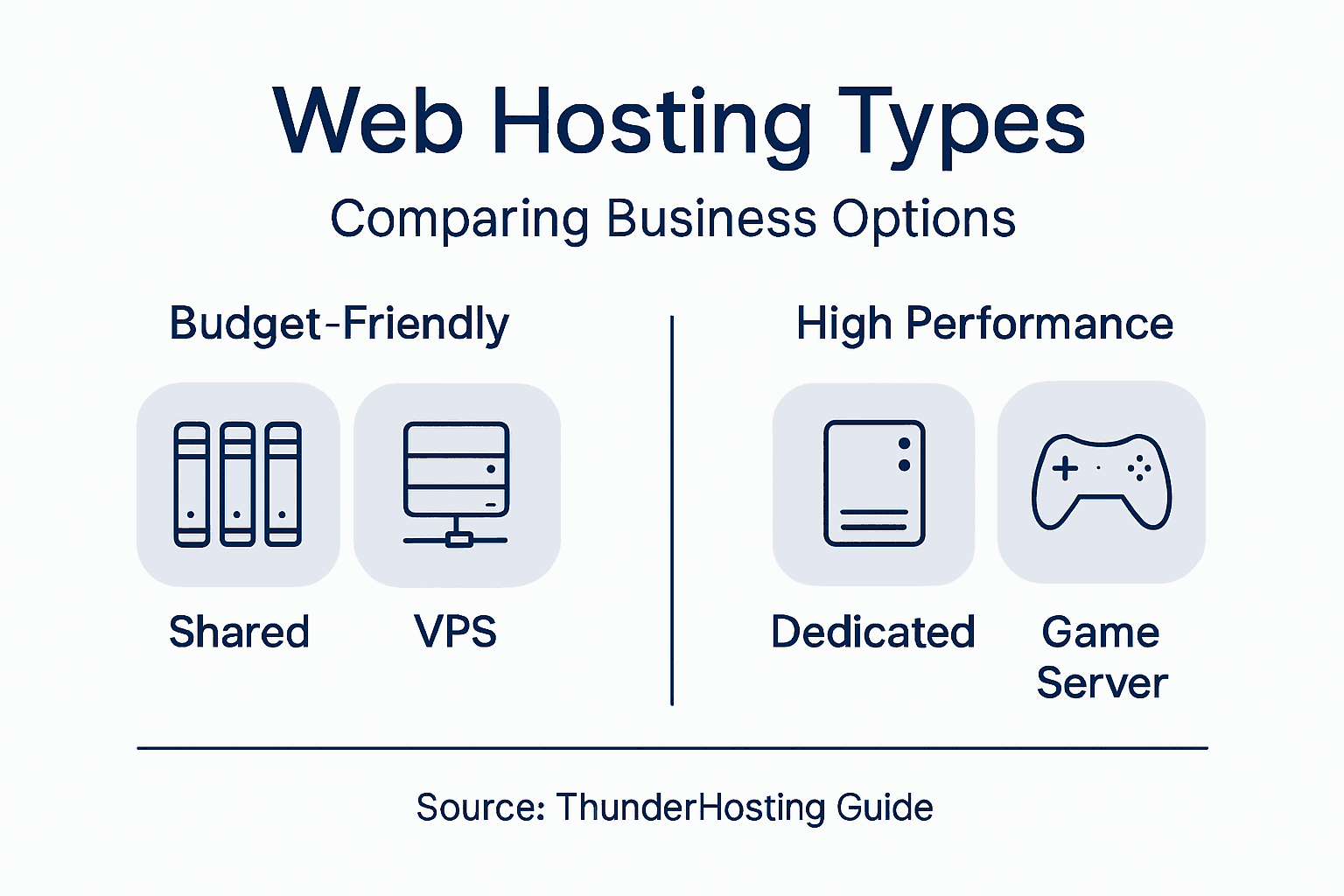
- Types Of Web Hosting: Shared, VPS, Dedicated, Game Servers
- How Web Hosting Works: Infrastructure And Service Features
- Selecting Reliable And Secure Hosting Providers
- Cost, Support, And Common Hosting Pitfalls
Key Takeaways
| Point | Details |
|---|---|
| Understanding Hosting | Web hosting is essential for websites, providing storage, security, and support, unlike just domain registration. |
| Types of Hosting Matter | Choosing the right hosting type—shared, VPS, or dedicated—affects performance and scalability for your business. |
| Cost Awareness | Be cautious of hidden fees and renewal costs when selecting a hosting provider; compare total costs over time. |
| Security Is Crucial | Ensure your provider offers robust security features, including SSL certificates and regular backups, especially for handling customer data. |
Defining Web Hosting and Common Misconceptions
Web hosting is the backbone of your online business. It’s the service that stores your website files on servers and makes them accessible to customers whenever they visit your domain. Without hosting, your website simply doesn’t exist on the internet.
Think of web hosting like renting commercial real estate. You need a physical location to operate your business, and hosting provides that digital location. The hosting provider maintains the servers, handles security, manages uptime, and ensures your site runs smoothly 24/7.
What Web Hosting Actually Does
Web hosting services handle several critical functions for your business:
- Stores your website files on powerful servers designed for constant operation
- Delivers your content instantly when customers enter your domain name
- Manages server infrastructure including hardware, networking, and data centers
- Provides security through firewalls, malware protection, and regular backups
- Maintains uptime so your site remains available around the clock
- Offers support when technical issues arise
The key difference? Web hosting involves far more than renting space. It’s a complete infrastructure management service.
Common Misconceptions About Web Hosting
Many Swiss business owners misunderstand what hosting actually provides. These misconceptions can lead to costly mistakes.
Misconception 1: Hosting and domain names are the same thing. They’re not. Your domain name (like yourcompany.ch) is your address. Hosting is the building itself. You need both to operate online.
Misconception 2: All hosting is basically the same. Different hosting types serve different needs. Shared hosting costs less but shares server resources with other sites. Dedicated hosting gives you exclusive server access for higher performance. VPS hosting offers a middle ground with isolated resources.
Misconception 3: Cheaper hosting is fine if it works. Unreliable hosting damages your reputation. Slow loading speeds frustrate customers. Downtime costs sales. For small to medium Swiss businesses, reliable hosting is an investment, not an expense.
Misconception 4: You can set up hosting yourself without help. Setup involves registering your domain, choosing a provider, uploading files, and configuring DNS settings. Many businesses benefit from guided setup and expert support.
Quality hosting directly impacts your customer experience and business success. Don’t cut corners on this critical foundation.
For Swiss e-commerce businesses especially, reliable hosting ensures your online store remains open and fast. Customers expect instant access to product information, smooth checkout processes, and secure transactions.
Here’s a summary of common hosting misconceptions and their real implications:
| Misconception | Reality | Potential Business Impact |
|---|---|---|
| Hosting is the same as a domain name | Domains are only the website address, hosting provides the server | Website may be unreachable or not set up correctly |
| All hosting is equal | Different types serve different needs and scale | Wrong type may hurt speed or reliability |
| Cheapest hosting is sufficient | Low-cost equals risk of downtime or slow loading | Poor performance can drive customers away |
| Hosting setup is easy to do solo | Proper setup requires technical knowledge and support | Misconfiguration can lead to security issues, downtime |
Pro tip: When evaluating hosting providers, prioritize uptime guarantees (aim for 99.9% or higher) and customer support availability over just finding the cheapest option. Your business depends on it.
Types of Web Hosting: Shared, VPS, Dedicated, Game Servers
Not all hosting solutions are created equal. The type you choose directly affects your website’s speed, reliability, and growth potential. Swiss businesses need hosting that scales with their ambitions.
Shared Hosting: The Budget-Friendly Starting Point
Shared hosting is where most businesses begin. Multiple websites live on a single server, dividing resources and costs among users. You’re splitting server power like roommates sharing an apartment.
This option works well if you’re:
- Just launching your first website
- Running a small blog or portfolio site
- Operating with limited upfront budget
- Expecting moderate, steady traffic
The trade-off? Limited customization and slower performance during traffic spikes. If another site on your server gets slammed, yours slows down too.
VPS Hosting: Control Meets Affordability
VPS (Virtual Private Server) hosting gives you dedicated server resources without the dedicated server price. Think of it as upgrading from a shared apartment to your own condo within a larger building.

VPS hosting provides isolated environments where your files and resources are protected from other users. You get root access, custom software installations, and better performance than shared hosting.
VPS suits growing Swiss businesses that need:
- More control over server configuration
- Better performance and reliability
- Room to scale as traffic increases
- Technical capability to manage servers
Dedicated Hosting: Maximum Performance
With dedicated hosting, the entire server belongs to you alone. No shared resources. No competing websites. Pure power and control.
Dedicated hosting delivers:
- Guaranteed resources for peak performance
- Complete customization freedom
- Superior security and isolation
- Ideal for high-traffic e-commerce sites
This is the premium option, but for busy Swiss online stores processing hundreds of daily transactions, the investment pays for itself through reliability and customer satisfaction.
Game Servers: Specialized Performance
Game servers operate differently from standard web hosting. They’re optimized for low-latency gameplay and real-time player interactions. Dedicated game servers use high-end hardware specifically tuned for gaming workloads, with built-in DDoS protection.
If you’re hosting multiplayer games, dedicated game server infrastructure ensures smooth gameplay and fast response times for players worldwide.
Choosing Your Hosting Type
| Hosting Type | Best For | Budget | Control | Performance |
|---|---|---|---|---|
| Shared | Beginners, small sites | Low | Low | Moderate |
| VPS | Growing businesses | Medium | Medium | High |
| Dedicated | High-traffic sites | High | Full | Maximum |
| Game Servers | Multiplayer games | Medium-High | Custom | Optimized |
Your hosting choice determines what’s possible for your business. Choose too small, and you’ll outgrow it. Choose too large, and you’ll waste money.
Most Swiss SMBs start with shared hosting, graduate to VPS as they grow, then move to dedicated hosting when traffic demands it. ThunderHosting makes these transitions smooth with migration assistance.
Pro tip: Start with VPS hosting if you’re serious about growth—it offers better performance than shared hosting at reasonable cost, and you’ll avoid costly migrations later.
How Web Hosting Works: Infrastructure and Service Features
Web hosting operates like an invisible engine behind your website. When a customer enters your domain name, complex infrastructure springs into action instantly. Understanding this process helps you appreciate what you’re paying for.
The Basic Request-Response Cycle
Here’s what happens when someone visits your website. A visitor types your domain into their browser. The browser sends a request to a web server (a powerful computer running specialized software). The server finds your website files, processes the request, and sends the content back to the visitor’s device.
Web servers store, process, and deliver content using HTTP protocol. The entire exchange happens in milliseconds. Your customer sees a fully rendered web page without waiting.
This simple process depends on sophisticated infrastructure working perfectly every moment.
Physical Infrastructure Behind the Scenes
Your hosting provider maintains physical data centers filled with powerful servers. These aren’t ordinary computers. They’re specialized machines designed for 24/7 operation.
Key infrastructure components include:
- Physical servers storing your website files and databases
- Network equipment connecting servers and users worldwide
- Backup power systems ensuring uptime during outages
- Cooling systems preventing hardware overheating
- Security infrastructure protecting against cyber attacks
- Redundant systems so if one component fails, others take over
ThunderHosting’s data centers in Germany, Singapore, Finland, and US regions provide geographic diversity and reduced latency for global customers.
Compare key infrastructure elements that differentiate quality hosting providers:
| Infrastructure Feature | Why It Matters | Result for Your Website |
|---|---|---|
| Geographic Data Centers | Reduces user wait times, supports global access | Faster loading for international visitors |
| Redundant Power Systems | Prevents outages from power failure | Consistent uptime and reliability |
| Hardware Refresh Cycles | Ensures servers run latest technology | Improved speed and stability |
| Load Balancing | Distributes traffic efficiently to avoid overload | Handles peak site visits without slowing |
Advanced Architecture for Reliability
Large hosting providers use multi-tier architecture with load balancers distributing traffic across multiple servers. When your traffic spikes, the system automatically routes requests to less-busy servers. Your website stays fast even during peak demand.
Smaller sites use single-server setups suitable for lower traffic volumes. As you grow, your infrastructure scales with you.
Core Service Features
Modern web hosting includes far more than file storage. Providers deliver comprehensive features ensuring your business thrives online.
Essential service features include:
- 24/7 accessibility keeping your site online always
- Email hosting for professional business communications
- Automatic backups protecting against data loss
- Security features including firewalls and malware scanning
- SSL certificates encrypting customer data and payments
- DNS management connecting your domain to your server
- E-commerce tools enabling online sales and payments
- Scalability allowing growth without disruption
Hosting infrastructure must balance performance, security, reliability, and cost. Quality providers excel at all four.
For Swiss businesses processing customer transactions, security features matter tremendously. SSL certificates encrypt payment information. Firewalls block malicious access attempts. Regular backups protect against data loss.
Why This Infrastructure Matters
Think about what’s at stake. Your website represents your business 24/7. A slow site loses customers. Downtime costs sales. Security breaches destroy trust. Superior infrastructure prevents these problems.
When you choose hosting, you’re choosing the foundation for your entire online operation.
Pro tip: Ask potential hosting providers specifically about their infrastructure redundancy and backup systems. Request uptime guarantees in writing, aiming for 99.9% or higher.
Selecting Reliable and Secure Hosting Providers
Choosing the wrong hosting provider can derail your entire online operation. The right provider becomes a trusted partner supporting your growth. For Swiss businesses, reliability and security aren’t negotiable.
The Critical Selection Criteria
Not all hosting providers are equal. You need to evaluate providers using specific, measurable standards. Don’t let marketing claims alone guide your decision.
Key selection factors include:
- Uptime guarantees of 99.9% or higher (this means less than 43 minutes of downtime yearly)
- 24/7 customer support via phone, email, and live chat
- Security features including SSL certificates, firewalls, and malware scanning
- Automatic backups protecting your data against loss
- Scalability allowing growth without service interruptions
- Transparent pricing with no hidden fees or surprise charges
Evaluate multiple providers. Compare their guarantees in writing. Don’t settle for vague promises.
Security and Data Protection
For Swiss businesses handling customer data, security is paramount. Reliable hosting providers implement multiple layers of protection. Providers should offer SSL certificates, firewalls, and malware protection as standard features.
Ask potential providers these specific questions:
- What security certifications do you hold?
- How frequently do you conduct security audits?
- What’s your incident response process if a breach occurs?
- Do you offer DDoS protection?
- How are backups encrypted and stored?
Swiss data protection regulations are strict. Your hosting provider must comply with Swiss and European data protection laws. Verify this before signing any contract.
Infrastructure and Performance
Your hosting provider’s physical infrastructure directly impacts your website’s speed. Swiss-based providers like ThunderHosting offer distinct advantages. Data stored within Switzerland means faster access for your Swiss customers and compliance with local regulations.
Evaluate infrastructure quality by checking:
- Server locations and geographic redundancy
- SSD storage instead of older hard drives (dramatically faster)
- Hardware refresh cycles ensuring modern, reliable equipment
- Network uptime history with documented statistics
- Load balancing distributing traffic efficiently
Support Quality Matters
When technical problems arise, responsive support saves your business. Reliable providers maintain 24/7 monitoring and staffed support teams. Response time matters. A 2-hour delay on a critical issue costs revenue.
Test support before committing. Email a pre-sales question and note how quickly they respond. Call their support line and evaluate professionalism. Review customer testimonials about support experiences.
Swiss-Specific Advantages
Swiss hosting providers understand local business needs. They offer infrastructure optimized for SMEs and developers. Features like managed servers, SSD storage, and comprehensive email protection become standard.
Choosing a Swiss-based provider gives you local support, data sovereignty, and compliance certainty—critical for Swiss business operations.
ThunderHosting’s commitment to guided services and free migrations means smooth transitions from your current provider. Their partnerships with WordPress and Shopify ensure compatibility with popular platforms.
Red Flags to Avoid
Certain warning signs indicate unreliable providers. Avoid any company offering suspiciously low prices without explaining how. Providers with no published uptime guarantees, limited support channels, or vague security descriptions pose risks.
Providers worth avoiding:
- Promise 100% uptime (impossible)
- Offer no documented security policies
- Have no published contact information
- Require annual prepayment with no cancellation option
- Show consistent negative customer reviews
Pro tip: Request a trial period or money-back guarantee before committing to annual contracts. This proves the provider stands behind their service quality and gives you hands-on evaluation time.
Cost, Support, and Common Hosting Pitfalls
Hosting costs seem straightforward until renewal time arrives. Many Swiss business owners discover hidden fees or dramatic price increases after their first year. Understanding pricing structures and avoiding common pitfalls protects your budget and operations.
Understanding Hosting Costs
Hosting pricing varies wildly depending on type and features. Shared hosting might cost CHF 5-15 monthly. VPS hosting ranges from CHF 20-100 monthly. Dedicated servers exceed CHF 100 monthly. But price alone doesn’t indicate value.
Watch for these cost traps:
- Introductory pricing that doubles at renewal
- Hidden setup fees not mentioned upfront
- Overage charges for exceeding bandwidth or storage limits
- Required add-ons like SSL certificates or backups
- Automatic upgrades you didn’t authorize
Read renewal terms carefully. Calculate your actual annual cost, not just monthly rates. Compare total cost of ownership across multiple years.
The Hidden Cost of Poor Support
Bad support costs money in downtime and lost productivity. When your website fails and support takes 8 hours to respond, you lose revenue. When support can’t solve problems, you waste internal resources troubleshooting.
Quality support includes:
- Phone access for urgent issues (not just email)
- Documented response times for different priority levels
- Knowledgeable technicians who actually solve problems
- Proactive monitoring catching issues before they affect you
- Knowledge base with guides and documentation
Test support responsiveness before signing contracts. Email questions and measure response time. Call their support line during business hours. This preview reveals actual support quality.
Common Pitfalls to Avoid
Common hosting pitfalls include underestimating resource needs leading to slow performance, security vulnerabilities, and lack of scalability. Many Swiss businesses launch with undersized plans, then scramble during growth.
Top pitfalls include:
- Choosing hosting based purely on price ignoring reliability
- Underestimating traffic growth requiring emergency upgrades
- Neglecting security configuration exposing customer data
- Ignoring backup frequency risking permanent data loss
- Picking providers without uptime guarantees accepting downtime risk
- Committing to long contracts before testing service quality
Most pitfalls stem from rushing decisions. Take time evaluating options. Test before committing.
Performance and Scalability Issues
A hosting plan that works today may strangle you tomorrow. Shared hosting becomes painfully slow during traffic spikes. Sites crash when you get featured in media coverage. Customers abandon slow-loading pages, killing conversions.
Build scalability into your plan from the start. Choose providers offering easy upgrades without downtime or penalties. VPS and dedicated hosting accommodate growth better than shared hosting.
The cheapest hosting isn’t cheap if it costs you lost sales through downtime and slow performance.
Migration and Exit Pitfalls
Some providers make switching difficult deliberately. They overcharge migration fees. They don’t export your data cleanly. You’re locked in paying high prices.
Before choosing a provider, ask:
- Do you offer free migrations to your platform?
- Can I export my data in standard formats anytime?
- What’s your cancellation policy and notice period?
- Are there penalties for early termination?
ThunderHosting offers free migrations, making transitions seamless. This removes lock-in risk.
Pro tip: Always negotiate your renewal rate when contacting support. Mention you’re considering switching. Existing customers often qualify for loyalty discounts matching introductory pricing.
Secure Your Online Success with ThunderHosting
The challenge of finding reliable web hosting that truly supports your business growth is real. As the article “What Is Web Hosting – Powering Business Online Success” explains, understanding the infrastructure behind hosting and avoiding common pitfalls like downtime, slow performance, and poor support is crucial. Whether you are starting with shared hosting or need the power of dedicated servers, ThunderHosting offers scalable, secure, and easy-to-manage solutions that grow alongside your ambitions.
Experience professional hosting with 24/7 support, free migration, and global data centers strategically located in Germany, Singapore, Finland, and the United States ensuring low latency for your customers worldwide. Take control with options including VPS Hosting, dedicated servers, and advanced security features tailored for Swiss and international businesses. Don’t let unreliable hosting hold you back. Visit ThunderHosting today and build your online presence on a solid foundation designed to power your business success.
Frequently Asked Questions
What is web hosting?
Web hosting is a service that stores your website files on servers and makes them accessible online. It acts as the foundation for your website, allowing customers to visit your domain and access your content anytime.
How do I choose the right type of web hosting for my business?
To choose the right hosting, consider your website’s needs. Shared hosting is cost-effective for small sites, while VPS hosting provides more control and performance. Dedicated hosting offers maximum resources for high-traffic sites. Assess your budget, expected traffic, and technical capabilities before making a decision.
What are the common misconceptions about web hosting?
Common misconceptions include believing that hosting and domain names are the same, that all hosting services are identical, that cheaper hosting is sufficient, and that you can set up hosting without help. Each of these can lead to costly mistakes if not understood correctly.
Why is the infrastructure behind web hosting important?
The infrastructure is crucial because it determines your website’s speed, security, and reliability. Quality infrastructure features, such as geographic data centers, redundant power systems, and advanced security measures, directly affect your site’s performance and the overall user experience.
Recommended
- Domain Hosting Explained: Powering Swiss Business Growth – ThunderHosting
- Affiliate footer – ThunderHosting
- Ecosystem – ThunderHosting
- What is my IP address – ThunderHosting
- 6 naudingiausi svetainių kūrimo pavyzdžiai verslui
- Top Local B2b Companies WordPress Website: Complete Guide
- Mis on veebihosting – Millal ja miks see olulist rolli mängib